Troubleshooting and Meter Skills








Live Remote Training Now Available
Learn how to use a multimeter safely and effectively to quickly find any circuit fault. This class is great for newer techs to learn the basics and for experienced techs to learn advanced skills.
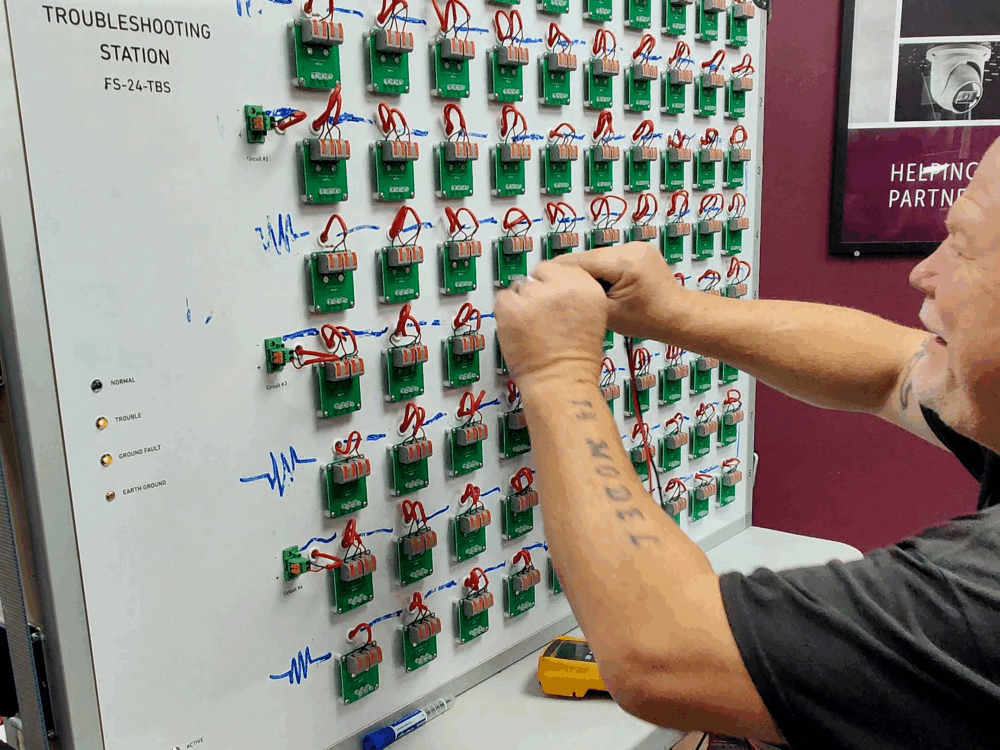
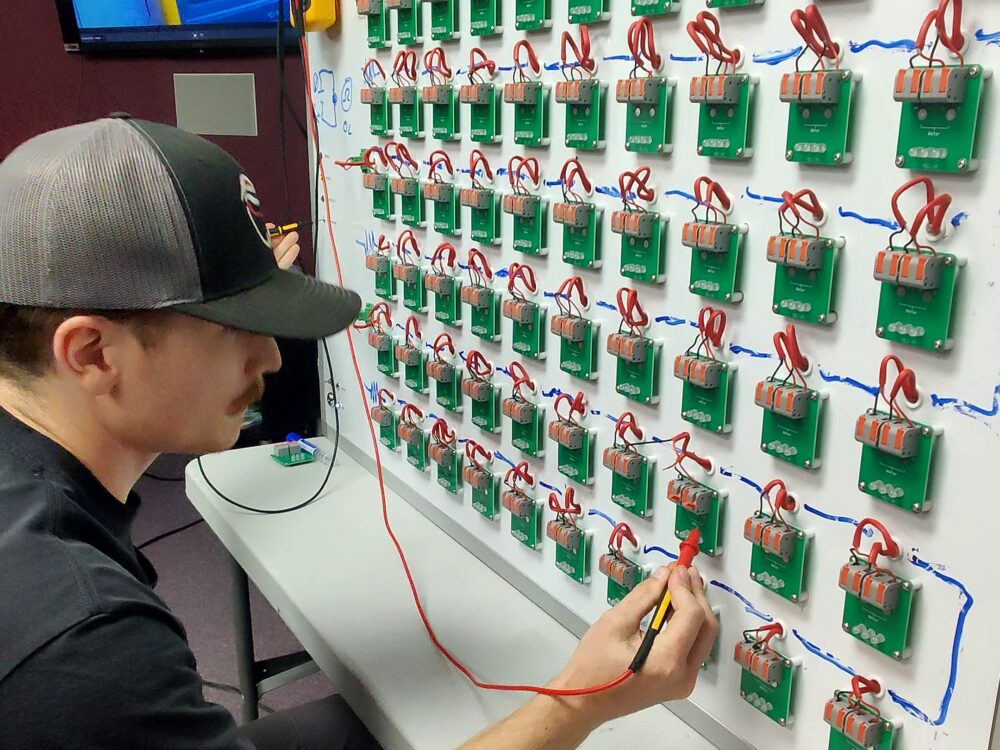
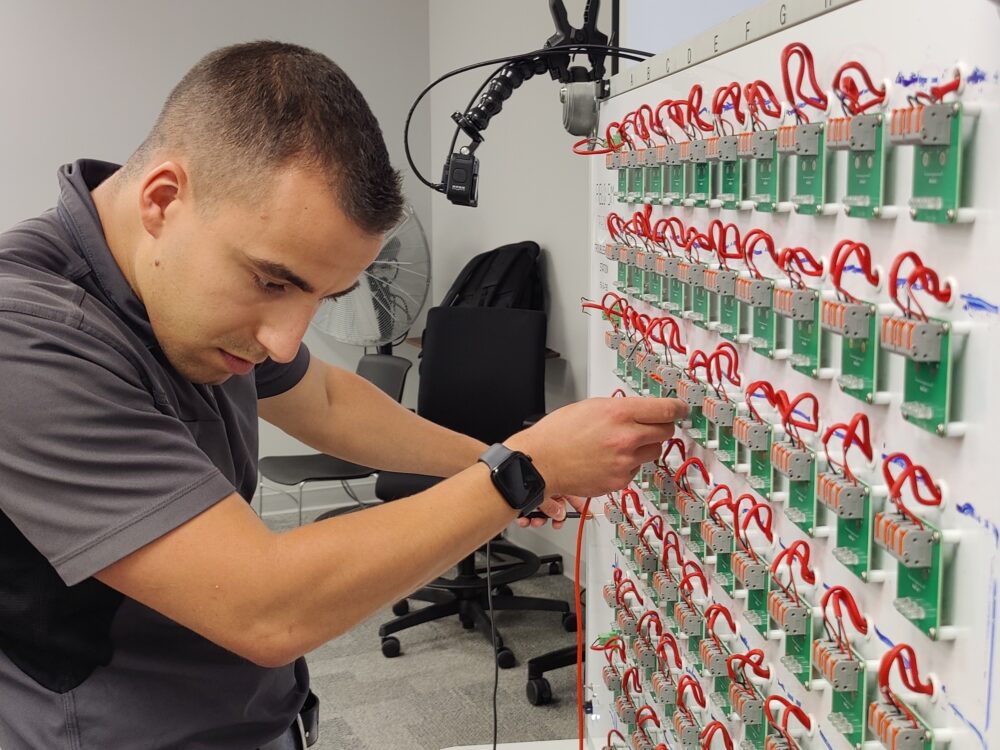
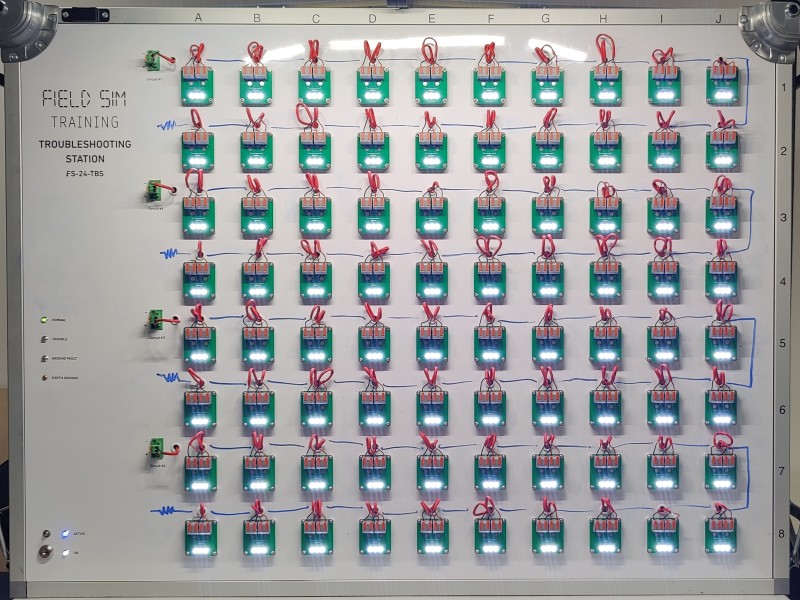
Student learn using a portable training board that has 80 circuit segments where the instructor can introduce opens, shorts, reverse polarity, and ground faults - including ground faults through water. Most importantly, students learn a repeatable process to find issues fast.
Training is focused on 12 and 24V systems so it's great for anyone who does fire, security, building automation, smart lighting, sound, PA, industrial automation, AV, nurse call, school clocks, gate and overhead door controls, stage lighting and theatrical controls, solar PV, car wash controls, fuel dispensing systems, telecom, data center infrastructure - techs in any low voltage controls industry.
Each course is tailored to the audience. Automation and controls technicians learn how to troubleshoot 24 VDC and 24 VAC circuits, how to verify phase when connecting transformer secondaries in parallel, and how to measure 4-20 mA sensor current.
Security technicians learn how to troubleshoot both parallel and series circuits, e.g., access control, intrusion zones, and sirens. Fire alarm technicians learn how to troubleshoot circuits with and without EOL resistors, Class A & B wiring, and get the most in-depth practice troubleshooting ground faults.
Hands-on practice finding faults with our training boards is a critical part of this class.
> Read about the history leading to the development of the FS-24-TBS Troubleshooting Station
Course Details
Students start by learning about the elementary physical forces that allow electricity to exist. Students will gain a clear understanding of current, voltage, and resistance. Building upon that knowledge, students will learn how circuits work and the different types of circuit faults.
After understanding basic circuit faults, students will learn how series and parallel control circuits (e.g., security, fire alarm, HVAC, SCADA, and other low voltage equipment control wiring) work, how these circuits get compromised, and how to find and fix the problem. Students will learn to troubleshoot circuits with and without end-of-line resistors.
Students will learn how to troubleshoot with a voltmeter and how to stay safe while doing so. Students will also learn how to use an ohmmeter (continuity mode) and when it is advised to use an ohmmeter instead of a voltmeter.
Most importantly, students will get repeated practice troubleshooting opens, shorts, ground faults, and reverse polarity on the FS-24-TBS Troubleshooting Station.

The Troubleshooting Simulator, available with a 4x20 layout to match the physical Troubleshooting Station and a more compact 4x10 layout for online-only classes. The UI includes the ability to activate/deactivate the system, view system status, use a full-featured digital multimeter, and add your own jumpers and resistors.

Advanced Topics
Moving beyond simple faults, students will learn how to troubleshoot difficult faults, including swinging or intermittent faults and weak shorts and ground faults.
Students will learn to troubleshoot difficult faults using advanced digital multimeter features, such as manual range, bar graph, and min/max record.
Students will learn tactics to determine the order of devices on a circuit where the path is unknown (useful for service techs and for install techs taking over from someone else).
Students will learn how to measure current to see if a circuit is overloaded. Controls and automation techs who work with 4-20 mA sensors will get to practice reading 4-20 mA sensor outputs.
Students will also learn how to use other electronic tools besides a digital multimeter, such as analog meters, meggers, and inductive amplifiers with tone generators.
Students will learn how to find a good ground reference and will be introduced to the Portable Ground Reference.
Students also get the opportunity to practice troubleshooting multiple simultaneous faults.
Relays and One-Line Electrical Diagrams
Additionally, students will learn how to read basic one-line DC electrical diagrams to determine how a relay is configured, using the FS-5-BFT Relay Training Board and the FS-12-SDR Demo Relay.


Interactive Circuit Simulator and Custom Video Game
To further enhance the learning experience, we use an interactive circuit simulator and a custom video-game.
Tailored Class Content
Each class is customized based on student specializations.
HVAC, building automation, or controls techs who work with 24 VAC devices (e.g., damper motors) will learn how transformers work and get hands on experience connecting 24 VAC transformers in parallel using the FS-24-XSC where they can safely witness firsthand transformers doubling the voltage when connected out of phase.

Techs who work with 4-20 mA sensors will learn how to measure sensor output by utilizing their digital multimeter in ammeter mode with the FS-24-4SG 4-20 mA Signal Generator, which lets them dial the 4-20 mA signal up and down while their meter is in series with the circuit.

Fire alarm techs will learn how to troubleshoot Class A wiring and how to diagnose and repair T-Taps. Security techs will learn how to diagnose faults on series circuits and how to determine whether contacts are open or closed.
Both security and fire alarm techs will practice troubleshooting ground faults through water.
Audience
This class is perfect for any low voltage controls technician whose role requires using a multimeter.
Course length: 16 hours
(16 CPD points)
Schedule
We offer private classes for companies and organizations, as well as public classes open to anyone. Here is our upcoming schedule. Further down are instructions for requesting a private class for your organization.
Private Classes
Let us know you're interested in a dedicated class by filling out the form below.
Online On-Demand Training
You might also be interested in our online courses, which make extensive use of 4K video, much of which was filmed in the field. Browse our list of online courses to learn more.
Did someone else pay for you to attend? Register or create your own user account.